 Skip to content

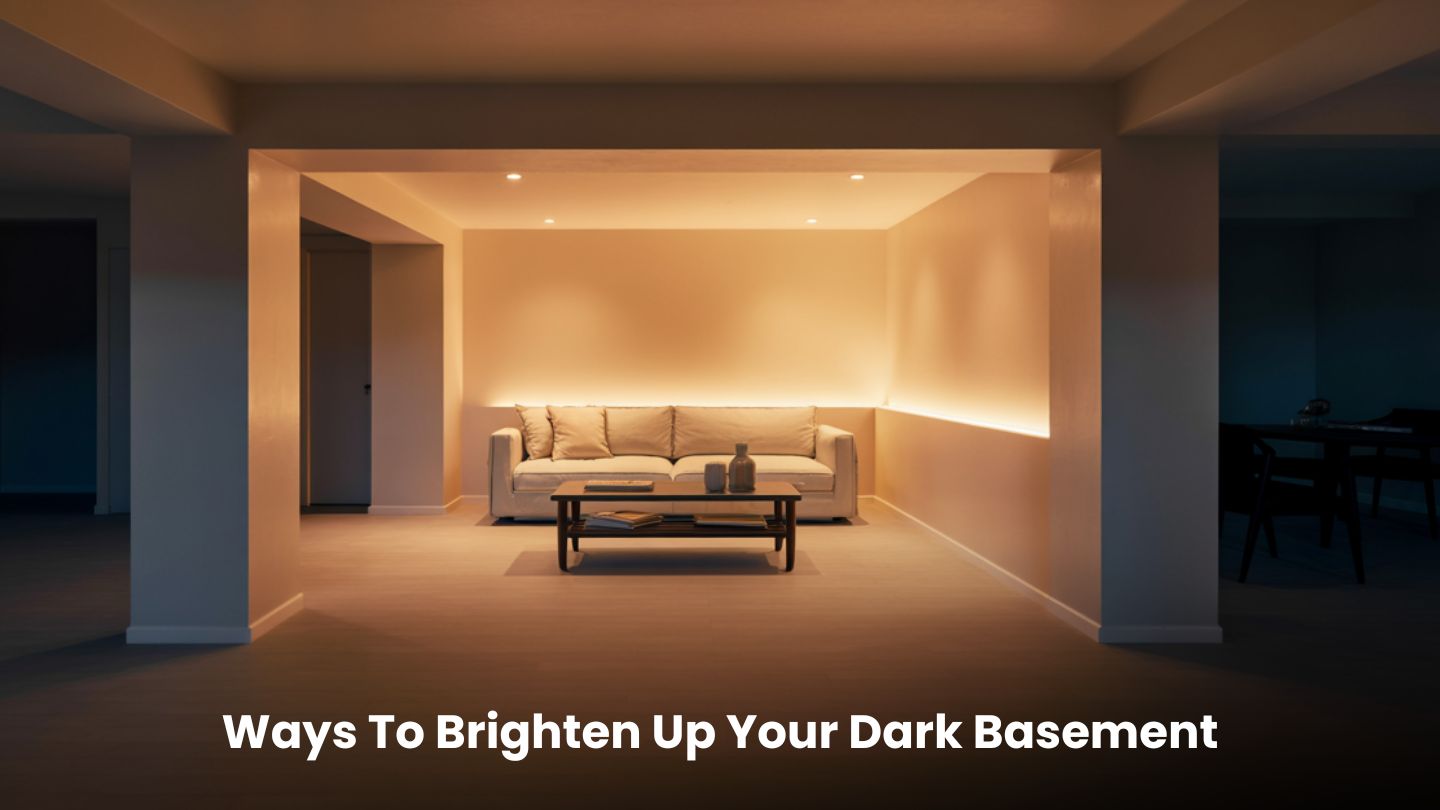
A basement doesn’t have to feel like a forgotten corner of your home. With the right design choices, even the darkest lower level can feel open, welcoming, and full of life. Simple upgrades in lighting, color, and layout can completely shift the mood of the space. Whether you’re creating a family room, home office, or guest suite, small changes can make a big visual impact. In this blog, we’ll explore practical and stylish ideas to transform your basement into a brighter, more inviting space.
Key Takeaways
- Even windowless basements from the 1970s–1990s can feel bright and livable with the right combination of paint, layered lighting, and strategic layout changes.
- The fastest upgrades are repainting everything in light colors, adding layered LED lighting, and using mirrors and reflective finishes to bounce light around the room.
- Bigger projects like adding egress windows, enlarging window wells, or addressing ceiling height dramatically increase natural light but require permits and professional contractors.
- Furnishings, textiles, and how you zone the room matter just as much as construction for making your basement feel inviting instead of cold and creepy.
- This blog covers larger renovation strategies, so you can choose what fits your timeline and budget.
Turning a Dark Basement Into Usable Living Space
Picture this: a typical dark basement with low ceilings barely clearing 7 feet, one small window from the 1980s that’s half-covered by overgrown shrubs, exposed ducts running overhead, and a cold concrete floor. It’s the kind of space that gets used for storing holiday decorations and forgotten exercise equipment. But here’s what we know after decades of finishing basements: that same room can become a bright, comfortable living space your family actually wants to use.
Take a 600 square foot unfinished basement from a 1985 home. With fresh light-toned paint on the walls and ceiling, a thoughtful layered lighting plan, one new egress window, and some smart furniture choices, that same space becomes a 2024 light-filled media room where the kids hang out with friends and parents can finally watch a movie without fighting over the living room upstairs. Understanding the structural differences between a daylight basement vs walkout basement helps set realistic expectations for how much natural light your space can gain.
Basements are naturally darker because they sit below ground level. Small windows set high on the wall, deep window wells, and limited exposure to direct sunlight all contribute to that cave-like feel. But design choices can absolutely compensate. The right paint colors can reflect 70-85% of available light. Strategic mirror placement can effectively double the brightness in adjacent areas. And modern LED lighting gives you complete control over how bright and warm the space feels.
Why Is My Basement So Dark?
If you’ve ever wondered why your basement feels like a dungeon compared to the rest of your house, you’re not alone. Most North American homes built between 1950 and 2005 have basements that were designed with one purpose in mind: mechanical systems, laundry, and storage. Lighting and livability were complete afterthoughts. Before planning upgrades, recognizing the right question to ask a contractor about basement remodeling can clarify structural and lighting limitations early.
Several factors work against you:
- Below-grade walls that block direct sunlight from reaching interior spaces
- Tiny hopper or slider windows positioned high on the foundation wall, often only 12-18 inches tall
- Deep window wells that limit how much light can actually reach the glass
- Overgrown landscaping like shrubs, trees, and bushes blocking what little window area exists
- Long roof overhangs above the foundation that cast shadows over windows year-round
Geography plays a role, too. If you live in a cloudy region like the Pacific Northwest, Great Lakes area, or New England, that lack of natural light becomes painfully obvious during the long winter months when sunshine is already scarce.
Before you start making changes, do a quick audit of your current situation. Walk through and note how many windows you have, what direction they face, what’s blocking them from the outside, and what lighting fixtures are currently installed. This gives you a baseline to work from and helps you prioritize which improvements will make the biggest difference.
Decide How You’ll Use the Space First
Before you buy a single can of paint or light fixture, think about how your family will actually use this basement. Brightness needs vary dramatically depending on function, and getting this right early saves headaches later. Budget planning becomes more focused when incorporating practical basement renovation ideas for those on a budget who prioritize lighting and layout.
Common basement uses include:
| Use | Light Level Needed | Key Considerations |
| Basement family room/media room | Moderate, dimmable | Comfortable ambient light reduces glare on screens |
| Home office | High, even lighting | 50+ lumens per square foot, minimize shadows |
| Playroom for kids | Bright and cheerful | Safety lighting, durable finishes |
| Guest suite or rental unit | Moderate to high | Egress window required for legal bedroom |
| Home gym | High, energizing | Cool white temps (3500K+), no dark corners |
| Craft room | Very high, task-focused | Strong task lighting over work surfaces |
A home office or rental suite needs higher light levels and fewer shadows than a cinema-style media room, which can stay a bit dimmer while still feeling warm and cozy. A playroom where kids spend their afternoons needs bright, even illumination throughout.
Take a few minutes to sketch a simple floor plan showing where your TV or screen will go, where desks or work surfaces belong, where beds or seating areas will sit, and where play zones make sense. This helps you plan light placement around those specific zones rather than just throwing fixtures on the ceiling and hoping for the best. Functional layouts improve significantly when applying how to maximize your basement’s space without overcrowding it through intentional zoning.
One important note: if you’re planning a bedroom, guest suite, or rental unit, code requires an egress window large enough for emergency escape. Current NEC electrical requirements also specify things like GFCI outlets and proper circuit capacity. Make these decisions before you start choosing decorative elements; it’s much easier to plan around code requirements than to retrofit later.
Fast Visual Brightening: Paint, Color, and Reflective Surfaces
This section covers the highest-impact, most budget-friendly changes that visually brighten a basement in a weekend or two. We’re talking about paint colors, sheens, and reflective surfaces that can make a dramatic difference without major construction.
The concept is simple: combine light paint on the walls and ceiling, carefully chosen accent colors that add warmth without absorbing light, mirrors positioned to bounce light deeper into the room, and slightly glossy finishes that reflect rather than absorb. Together, these elements can make a space feel 20-30% larger and significantly brighter.
One thing worth mentioning: prep work matters. If you’re painting over dark paneling, covering stains, or dealing with a musty old basement, proper priming and sealing make all the difference in the final brightness and evenness of your color. Smaller lower levels benefit from applying innovative ideas for small basement remodeling to transform your space, that enhance brightness without expanding square footage.
Repaint the Walls and Ceiling in Light, Reflective Shades
Light, neutral paint colors are your best friend in a dark basement. Soft whites, creams, and pale greiges (that’s gray-beige) maximize reflected light and make the whole room feel more open.
Some specific colors that work beautifully:
- Benjamin Moore White Dove (OC-17), a warm, versatile white that doesn’t feel stark
- Sherwin-Williams Alabaster (SW 7008), a creamy off-white with great reflectivity
- Benjamin Moore Classic Gray (OC-23), a soft greige for those who want a bit more warmth
For your ceiling, go with a shade of warm off-white rather than pure brilliant white. Brilliant white can feel clinical and harsh, especially in a basement. A warmer tone increases reflectivity while also making the ceiling height feel more generous, especially when considering important things to know before remodeling your basement.
Got old dark wood paneling on your basement walls? You don’t necessarily have to tear it out. If the budget is tight, sand the surface lightly, apply a quality stain-blocking primer, then roll on two coats of your light color. It’s a fraction of the cost of demolition and drywall, and the results can be surprisingly good.
For sheen, go slightly higher than you might upstairs. Eggshell or satin finishes reflect more light than flat paint and hold up better against moisture and scuffs, both common basement challenges. Keep your trim and doors a shade brighter than the walls to frame the room and add crispness without feeling harsh.
Read More: 6 Best Basement Paint Colors
Use Mirrors and Other Reflective Surfaces Strategically
Mirrors are one of the most effective tools for brightening a basement because they literally multiply your light. Position a mirror opposite a window or across from a major light fixture, and you can effectively double the perceived brightness in that area.
Here’s how to use them strategically:
- Place one large floor mirror (at least 24×36 inches) behind a sofa or console table to reflect light from lamps and windows back into the room
- Create a gallery of smaller mirrors in a hallway or near the stairs to pull light deeper into interior spaces
- Consider mirrored or glass cabinet doors on built-in storage or a basement bar
- Use metal lamp bases, glossy white tile backsplashes, and frames with metallic finishes to add smaller reflective points throughout
A word of caution: don’t go overboard with super high-gloss surfaces on every wall and surface. The goal is balanced brightness, not a glary funhouse. Mix matte and reflective textures so the room feels natural and comfortable. Structural planning becomes clearer when reviewing everything you need to know about basement vs crawlspace before beginning major upgrades.
Safety note: always securely anchor large mirrors to masonry or studs. This is especially important in homes with kids or pets who might bump into things during play.
Brighten the Floor With Lighter Colors and Rugs

Dark concrete or espresso-colored laminate absorbs a surprising amount of light. Switching to lighter flooring tones can make an immediate, visible difference in overall brightness.
Great options for basement floors include:
- Light oak or maple-toned LVP (luxury vinyl plank) rated for below-grade installation
- Pale tile patterns in porcelain or ceramic
- Painted concrete using a light-colored porch-and-floor enamel
For a cost-effective approach, look for 6-inch by 48-inch light LVP planks specifically designed for basement installation. These typically have waterproof cores and can handle the moisture fluctuations common in below-grade spaces.
Large, light-colored area rugs also make a huge difference. An 8×10 or 9×12 rug in cream, soft gray, or warm neutral tones covers dark flooring and visually lifts the entire room. Wool blends or washable synthetics work well in basements; just make sure to choose rugs with breathable backings if moisture is a concern.
Consider layering: a neutral base floor (carpet or LVP) topped with a patterned rug in cream and soft accent colors creates visual interest while keeping things light. Moisture considerations matter, and determining whether my basement needs a dehumidifier can influence flooring and finish decisions.
Layered Lighting: The Most Reliable Way to Brighten a Basement

Here’s the truth: effective lighting is the single most controllable way to brighten a dark basement, regardless of window size. You can’t add windows to every wall, but you can absolutely install enough well-planned lighting to make the space feel bright and inviting at any hour. Fixture selection becomes more strategic when guided by a thorough guide to the best basement lighting options tailored to basement conditions.
The concept is called layered lighting, and it involves three types working together:
- Ambient (general) lighting, the overall brightness that fills the room
- Task lighting, focused illumination where you actually need it
- Accent lighting, decorative fixtures that add warmth and eliminate dark corners
Before diving in, consider your electrical situation. If your basement is still running on an older, underpowered panel from the 1970s or 1980s, you may need to add circuits to support modern lighting demands. And always, always include dimmers; they let you create different moods in the same space, from bright and energetic for daytime use to warm and cozy for movie nights. Also, before installing new fixtures, reviewing important things to consider when finishing a basement helps ensure electrical capacity supports your lighting plan.
Add Strong Ambient (General) Lighting
Your ambient lighting creates the foundation, a bright, shadow-free base level of light throughout the space. Evenly spaced recessed LED cans or low-profile surface-mount ceiling lights work best for most basements.
A helpful guideline: plan for 20-30 lumens per square foot in family rooms and relaxation spaces, and 50+ lumens per square foot in workspaces, gyms, or craft areas. Adjust based on your wall colors and ceiling height; lighter walls need slightly less, and darker walls need more.
For color temperature, stick with warm-to-neutral white:
- 2700K-3000K for cozy family rooms and media spaces
- 3500K for home offices or gyms where you want a more energizing feel
Avoid going higher than 4000K in living areas; it creates a cold, blue-tinged basement feel that nobody wants.
In basements with low ceilings (7 feet to 7.5 feet), ultra-thin LED wafer lights are ideal. These sit nearly flush with the ceiling surface and don’t visually lower the room the way traditional recessed cans can. The difference in perceived ceiling height is noticeable.
Consider using smart dimmers or multi-switch setups so different zones of your basement can be brighter or softer as needed. The TV area might be dim while the kids’ play corner stays bright.
Use Task Lighting Where You Actually Need It
Focused task lighting prevents eye strain in areas where you actually do things: desks, crafting tables, reading chairs, laundry zones, and workbenches. General ambient light alone isn’t enough for these spaces.
Good task lighting options include:
- Adjustable desk lamps with directional heads
- Swing-arm wall sconces over reading chairs or beside beds
- Track lighting aimed at work tables or craft areas
- Under-cabinet LED strips over counters, bars, or workbenches
- Puck lights installed under shelves
For renters or anyone who can’t easily hardwire new fixtures, plug-in wall sconces are a great solution. They mount on the wall and plug into a nearby outlet, no electrician required.
Here’s a practical example: a 10-foot-long desk wall can be beautifully lit with a continuous LED strip mounted under a shelf just above the work surface. The result is even, shadow-free illumination across the entire workspace.
Task lights can also double as accents. A picture light over artwork, LED strips inside glass-front cabinets, or focused spots on a basement bar all serve functional purposes while adding visual interest.
Layer in Accent and Ambient-Boosting Fixtures
Floor lamps, table lamps, wall sconces, and even string lights soften corners and eliminate those gloomy pockets of darkness that make basements feel unwelcoming.
Place tall floor lamps behind sectionals or in corners where overhead lighting doesn’t quite reach. Choose translucent shades that diffuse light for a warm glow rather than directing it in a single beam.
Some additional accent lighting ideas:
- LED bias lighting behind your TV reduces contrast with dark walls and makes the entire wall feel lighter
- Accent lighting on architectural features like columns, built-in shelving, or a fireplace creates dimension and draws the eye
- Table lamps on end tables or console tables add warmth at eye level
- String lights in a cozy corner or along open shelving add fun, playful ambiance
Mix different lamp heights and shapes throughout the space. This makes the lighting feel intentional and designed rather than like random leftover fixtures from other rooms in your house.
Read More: Ways to Add More Natural Light in Your Basement
Bringing Light and Life Back to Your Basement
Brightening a dark basement is all about smart design choices that maximize light, color, and layout. From reflective paint and layered lighting to moisture control and strategic décor, every upgrade works together to transform the space. With thoughtful planning, even the dimmest basement can feel open, comfortable, and truly inviting.
R&S Basements delivers expert basement finishing in Jasper designed to turn underused spaces into beautiful, functional living areas. We specialize in basement remodeling inBig Canoe, Cherokee County, Canton, Ball Ground, Johns Creek, Dawsonville, Alpharetta, and Cumming. Let us help you reimagine your basement with craftsmanship and attention to detail that bring your vision to life. Reach out today to get started.
Frequently Asked Questions
How can I brighten a basement if I can’t add any windows?
Focus on reflective paint with high LRV, layered LED lighting, and strategic mirrors to amplify existing light. Use light flooring or rugs, paint walls and ceilings in similar tones, and reduce clutter with closed storage to enhance brightness and openness.
What’s the best paint color, temperature, and bulb type for basements?
Choose warm-to-neutral white LEDs between 2700K and 3000K for comfortable living spaces. Use 3500K–4000K only in task-focused areas like gyms. Select high-CRI bulbs (90+) to ensure accurate color rendering and prevent dull or washed-out tones.
How do I deal with low ceilings while trying to make the basement brighter?
Install recessed or ultra-thin LED wafer lights to avoid lowering visual height. Paint ceilings the same or slightly lighter than walls to blur edges. Choose low-profile furniture and keep vertical pieces against walls to emphasize openness.
Is carpet or hard flooring better for a bright basement?
Light-colored hard flooring like LVP or tile reflects more light and handles moisture better. Add pale rugs for warmth. In dry basements, light-toned carpet can work, but avoid dark finishes that absorb light and reduce brightness.
Do I need a dehumidifier if I’m investing in bright finishes and lighting?
Yes, most basements benefit from humidity control. Maintain 40–50% relative humidity to protect paint and flooring from damage. Address leaks or seepage first, and use a dehumidifier consistently to preserve comfort and long-term finish quality.
